Introduction
In today’s fast-paced retail and hospitality environments, a reliable Point of Sale (POS) system is more than just a checkout tool—it’s the backbone of daily operations. From managing sales and inventory to improving customer experience, the right POS system can significantly impact efficiency and profitability.
Whether you run a small café, a busy restaurant, or a retail store, selecting the right POS solution is a critical business decision.
What Is a POS System?
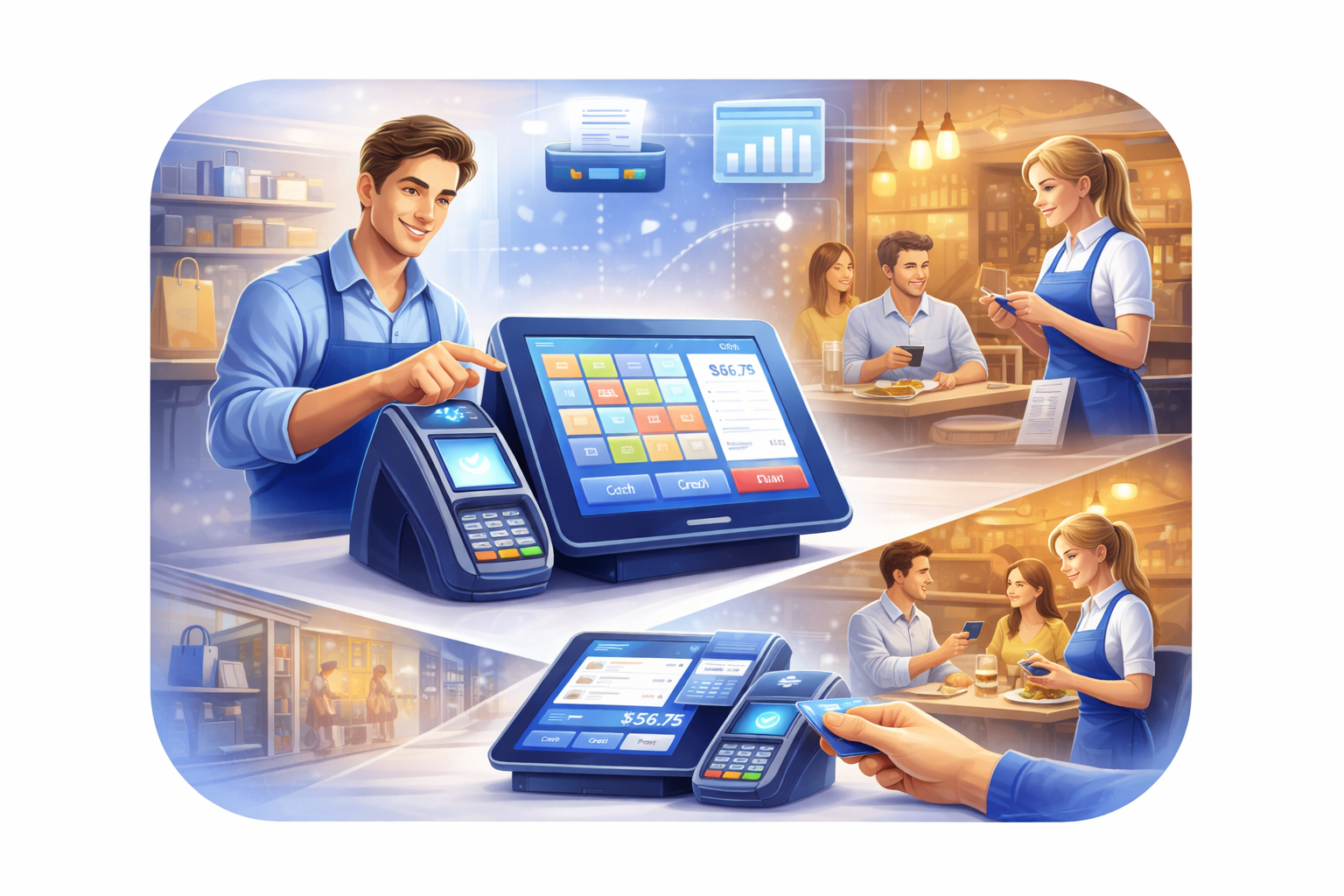
A POS system combines hardware and software to process transactions and manage business operations. Modern POS platforms often include:
-
Touchscreen terminals
-
Card readers and receipt printers
-
Inventory management
-
Sales reporting
-
Customer data tracking
-
Staff management tools
Advanced systems also integrate with accounting software, online ordering platforms, and loyalty programs.
Key Features to Look For
1. Ease of Use
Your staff should be able to learn the system quickly. A clean interface reduces training time and minimizes mistakes during peak hours.
2. Inventory Management
A good POS tracks stock levels in real time, alerts you when items are running low, and helps prevent over-ordering.
3. Payment Flexibility
Look for systems that support:
-
Credit and debit cards
-
Mobile payments
-
Contactless transactions
-
Gift cards
This ensures convenience for customers and faster checkout.
4. Reporting and Analytics
Detailed sales reports help you understand:
-
Best-selling items
-
Peak business hours
-
Employee performance
-
Revenue trends
These insights support smarter business decisions.
5. Scalability
As your business grows, your POS should grow with you. Choose a system that supports multiple locations, additional terminals, and advanced features when needed.
6. Security and Compliance
Your POS must protect customer data and meet payment security standards. Features like encrypted transactions and user access controls are essential.
Retail vs Restaurant POS: What’s Different?
Retail POS Systems Focus On:
-
Product scanning
-
Inventory tracking
-
Barcode management
-
Customer loyalty programs
Restaurant POS Systems Focus On:
-
Table management
-
Order routing to kitchen
-
Menu customization
-
Split billing and tipping
Choosing industry-specific software ensures smoother daily operations.
Cloud-Based vs Traditional POS
Cloud POS
-
Accessible from anywhere
-
Automatic updates
-
Lower upfront cost
-
Real-time reporting
Traditional POS
-
Runs locally
-
Limited remote access
-
Higher initial investment
Most modern businesses prefer cloud-based POS for flexibility and remote management.
Why Professional POS Setup Matters
Even the best POS system won’t perform well without proper installation and configuration. Professional POS support ensures:
-
Correct hardware setup
-
Software customization
-
Staff training
-
Ongoing maintenance
-
Fast troubleshooting
This reduces downtime and keeps operations running smoothly.
Final Thoughts
Choosing the right POS system is an investment in your business’s future. A well-selected and professionally supported POS solution improves efficiency, enhances customer experience, and provides valuable business insights.
Take time to assess your needs, compare features, and work with experienced IT professionals to ensure your POS system delivers long-term value.
